
Last year, I did a real time for my father in combat, but I left the long long stalemate summarized. I thought, since I have his platoon’s morning reports, I’d look at what the day to day was as they dug in during the worst winter weather of the 20th Century in the Vosges Mountains. There seems to be a lot of illusions about war as some kind of video game or television show. War is trauma, and then, after the trauma, a lot of long hard slogging through miserable conditions and a lot of stressful boredom.
Like I posted last week, on the homefront, people were complaining about rationing and wrestling with shortages. I know that Mom was pouring over the paper every day looking for any scrap of news about the 7th Army or the 100th Division, which, given Generals Devers, Patch, and Burress’s loathing for the press, was hard to find. When she found something, she pasted it into her scrap book. These are the last pages she placed in the scrapbook that documents her romance with Dad. She got almost no letters at this point. In the age of Facetime and Zoom, it’s hard to realize how complete the silence could be. All there was for her was absence of news. As long as the telegram delivery man didn’t knock on her door, her husband might be alive.
The news that was filtering through was nothing about Dad’s unit. It was the terrifying news that the easy advance on Germany was over. If you want to catch up about the Battle of the Bulge, check this out
Dad wasn’t writing. There was very little time. But also, what was there to say that wasn’t alarming? He had started the habit of protecting her from what he was going through, as he did the rest of his life. She never knew he’d been through hell until I started working on this project. Here’s what he’d just been through in early January.
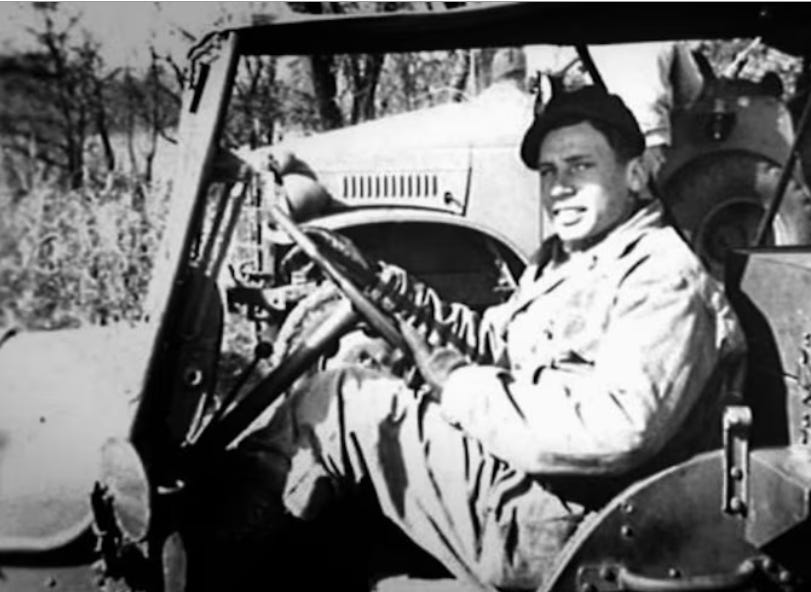
The man who had been a frequent chatty letter writer before the war had become the silent man I knew. But as it turned out he was writing something during the war. He was the lieutenant in charge of the Second Platoon, Company C, 325th Combat Engineers. Every day, he wrote terse reports, documenting in a way the boredom and terror as they prepared defenses and waited for what the Germans were doing next. They had another two months of waiting in the foxholes in the Vosges Mountains during the worst winter Europe experienced in the 20th Century.
Laying mines in the bitter cold and snow was its own source of terror. Explosives and wires became unstable. Watching tensely for 12 hours at a road block wasn’t exactly calming. Trying to work with coils of barbed wire creating concertinas in sub zero temperatures tried the patience of a saint, and these guys were not saints.
The ground was so frozen, the infantry couldn’t dig foxholes, so the engineers had to dynamite the ground to get below the frostline and dig out a secure hole. The engineers were ordered to dig them in all over the landscape as “just in case” retreats for the infantry. Famously, Dad’s friend Carl, sergeant in the first platoon, was blowing holes on top of a very exposed hill when the Germans spotted them and lobbed in some shells. They said, oh hell, no one will actually use these, and headed back down the hill. He went to a reunion 30 years later only to listen to some 399th Infantry guys talk about how they retreated to a hill only to find the predug foxholes too shallow. Carl walked up to him and apologized.
And they did the same thing day after bitter cold day.
January 7 had been the high tide of the German advance, but they didn’t know that. In the bitter cold and deep snow, the combat engineers dug in and tried to keep the roads passable for supplies to get through.
January 7: Graveled roads in Siersthal. Made stock piles on Rahling to Bining Road. Hauled 220 MIAI mines up from battalion dump.
This was an interesting development, requiring new training. As far as I can find, MIAI mines were a type of naval mine developed by the Japanese Imperial Navy strong enough to blow holes in the sides of ships on contact. I’m guessing the Army had decided to make them with the idea of stopping the unstoppable Panzer tanks on contact. Dad said the tanks stopped only when they ran out of gas.
January 8: Graveled road at Siersthal. Made Daisey mine chain for infantry. Guarded abatis and bridge west of Enchenberg.
Daisey or Daisy mine chains interconnected antitank mines across a road and could be quickly deployed, apparently. Once one mine was tripped the whole chain blew up.
January 9: laid mines north of Petite Rederching all day and one squad at night. Worked on bad spot in road west of Hottviller. One squad guarded roadblocks.
January 10: Guarded roadblocks and minefields. Brought up 1500 mines and worked on base line of mine belt.
January 11: Entire platoon kept busy crating and re-loading mines to take back to Battalion Headquarters. At noon time two trucks went out to sand roads. Guearded road blocks.
Dad hated Battalion Headquarters. It sounds like this was the kind of a reason why. Transport the mines, lay the mines, then pull the mines, and return to Battalion Hq.
January 12: Sgt. Manogue went out with his squad to blast fox holes for infantry. Guarded road blocks. Made concertinas in company area.
Their concertinas large coils of barbed wire, anchored to the ground with pickets. I couldn’t find a good photo, but I did find coiled concertinas that this company will sell you now. Google image insisted on delivering photos of the musical instrument, which is apparently where the name comes from. It pumps air using coils to expand back and forth. I can’t imagine trying to manipulate and shape these wire entanglements in the cold, pickaxing through the frozen earth to make a hole for the picket.
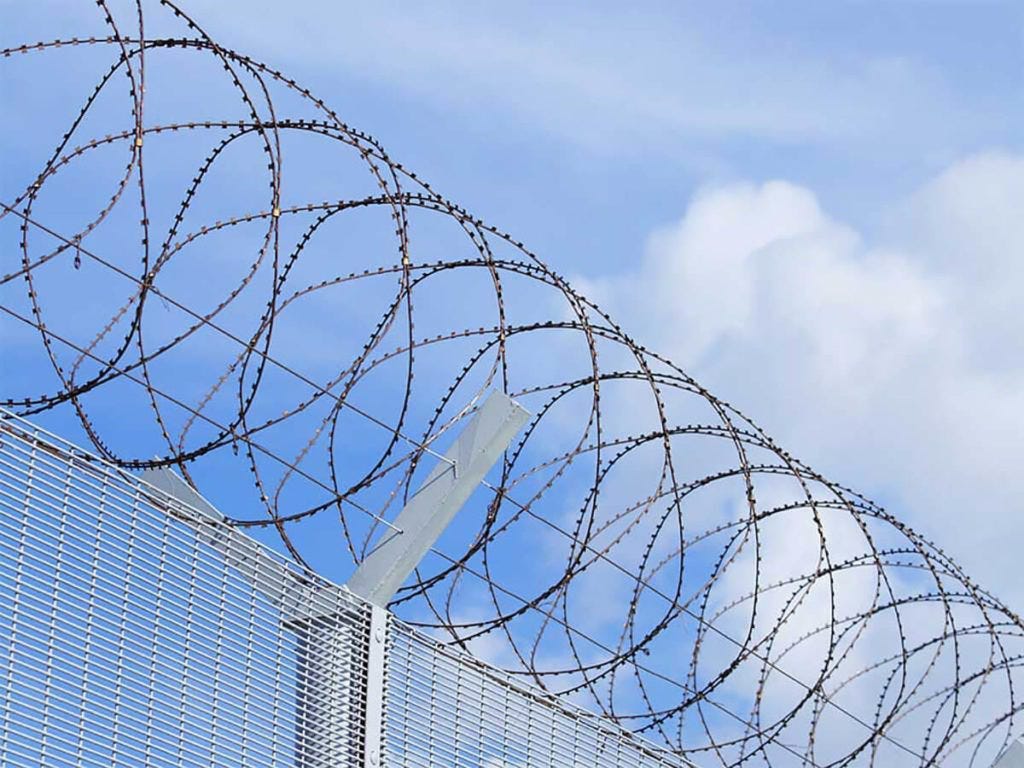
January 13: 1st squad to dig and also blow fox holes and gun emplacements for the infantry. Hauled wire up from Battalion Headquarters. Worked on concertinas. Guarded road blocks.
January 14: 1st squad blowing and digging fox holes and emplacements for the infantry. Used air compressor this time. guarded road blocks. Made concertinas.
[I suspect Dad was pleased with himself that he’d found a way to use the air compressor to speed things up but also not announce to the Germans where they were with explosions.]
January 15: Entire platoon made concertinas.
January 16: Worked on concertinas
January 17: Worked on concertinas and went to Petit Rederching
January 18: Took concertinas to infantry
January 19: Concertinas, guarded road blocks
And then, something completely different happened, at least for the officers and their drivers.
January 20: Co-pilot of B17 dropped by parachute near Company C Command Post
The co-pilot parachuting down was interesting enough to both Dad and his buddy T.C. that both of them separately told me the story 50 years later. T.C. was the jeep driver for Lt. Bell, the lieutenant in charge of the first platoon. They were in the Command Post with Company Commander Capt. Bagley when they heard a bomber coming down. Dad, Bagley, and Lt. Bell (with T.C., his driver) saw a parachute emerge and realized it was dropping in their sector so they jumped in their jeeps and headed that way. When they got there, the guy in the parachute was caught up in a tree. As T.C. recalled, the “damn fool” was yelling all the time and violently struggling. They shouted at him that they’d get him down and he should stay still, but he wouldn’t listen. He fell to the ground and broke his leg.
They went to him and he seemed ok, but he just kept going on about how his wife would kill him when she heard the news that he’d been shot down. Bagley and Dad stayed with the co-pilot, who was wearing a clean and pressed uniform, much to their disgust. The engineers hadn’t had a shower or changed their clothes in two months of combat in the mud. Bell and TC took off to where they thought the plane had gone down.
The co-pilot asked where he was. They told him he was on the front lines on the border of Germany. He suddenly went rigid. As far as Dad could tell, he had seemed physically ok, apart from the broken leg, until he got the news he was on the front. Dad thought it was some kind of hysteria. He was rather disgusted about it all—the clean uniform, the fuss about his wife, the reaction to their reality. Dad didn’t have a lot of sympathy, but they got him out to the aid station, where he was whisked back to the land of clean clothes and warm buildings. Neither Dad or T.C. mentioned other casualties, so I’ve assumed the crew had bailed out earlier, over Germany, but I don’t know. By this time, they’d seen a lot of death and it might not have been noteworthy. What they remembered was the contrast of how the war went for others while they were alone in the snow. It still rankled decades later. After the war, it probably didn’t help that the flying aces got the movies, and other units got the attention. No one paid any attention to the 7th Army because the history wasn’t written but also, Hollywood wanted the fantasy of action heroes, not the long hard slog of actual war. Combat engineers might be essential but they weren’t going to be portrayed by Errol Flynn.
I will note that the combat engineers in France do have one famous Hollywood alum—Mel Brooks. Yes, the creator of Springtime for Hitler was in the Battle of the Bulge. Don’t think Dad or T.C. knew he was one of them, but Dad loved Blazing Saddles.
.
.